Search This Blog

Showing posts with label Naples. Show all posts

Friday, December 23, 2022

Christmas Prophesy


Occasionally Edward Hutton would report on discussions he had with Italian friends. On one spring day he visited a friend at a Camaldoli monastery outside of Naples, and found him engaged in a heated discussion with a visiting French professor. They were discussing the fourth Eclogue of Virgil, Hutton's favorite Roman poet, in which the poet, only 40 years before the birth of Christ, had mentioned the birth of a son who would usher in a Golden Age. Here is his account of part of the discussion.


Now during the latter part of the discussion that learned professor from Naples whom everyone reveres had arrived on the terrazza unseen by any but myself. We had exchanged glances. He now came forward and was introduced. When he was seated he turned to Dom Costanzo his host and then to the Professor from abroad.


“I have heard,” he said, “part of your discussion, and if you permit… It seems to me there are two ways of interpreting this lovely Eclogue of Virgil’s. Looking at in in one way it becomes a supernatural prophecy; looking at it in another way it is merely historical and deals with events of Virgil’s own time. Both ways are right. But those who would interpret the poem simply historically, for the most part modern scholars, would generally deny that there is such a thing as the supernatural and consequently must interpret the poem simply historically or leave it alone. That is surely unfortunate. Nevertheless I think they may be right, not in their prejudice, but in their interpretation, without thereby condemning their opponents as wrong. To say of any verse of Vergil’s that we have got to the bottom of it is dangerous. I think in fact that this poem is a prophecy of the birth of Christ, but I do not think Vergil knew what he was saying. In other words I believe Virgil was supernaturally inspired, but was in himself in ignorance. …”


“In any case,” I said, “Vergil has prophesied the Birth of Christ whether he knew it or not, whether he intended it or not, whether he was acquainted with the Messianism of the Jews, or of the time, or not, and whether we like it or not. The Fourth Eclogue as Reinach has said is ‘la premiere en date des oeuvres chretienne’.”


“After all,” said the Professor from Naples, “a prophecy is something which is to be fulfilled. Vergil’s poem in its Christian sense has been fulfilled. Moreover a prophesy is largely what one can make of it. Now historically one can make nothing of the fourth Eclogue. What has the birth of a son to Pollio come to? And why should the birth of a son to Pollio bring in a Golden Age? On the other hand the whole of Christian antiquity with the exception of S. Jerome, from Constantine, Lactantius, S. Augustine, Abelard, Dante and Innocent III, to Marsilio Ficino and even to Alexander Pope has accepted the poem as a prophecy that has been fulfilled in the birth of Christ. It is only now, when Christianity and with it the supernatural are denied altogether, that the supernatural content of the poem is passionately and eagerly refuted, rather through hatred and material interpretation of things than for any other reason. If the critics are right then Virgil was wrong. Credo in Virgilium.


Does anyone believe that the authors of Ecclesiasticus or of the Song of Songs knew they were prophesying of the Blessed Virgin? Yet assuredly they were, as the whole world for more than a millennium has testified; or that Isaiah had any but at most the vaguest notion that the Puer natus est of whom he chanted was to be the Jesus Parvulus born in a stable at Bethlemen.?


A prophecy is to be tested by its fulfillment, and its fulfillment is to be tested by the judicum orbis terrarium. Few are the prophets who understand what they are prophesying."


###


Edward Hutton: Naples and Campania Revisited. London, 1958.Preface. Pp. 99-100.

Friday, December 16, 2022

Port of Naples


Edward Hutton found the port of Naples the most interesting part of the city.


On coming out of the Castel Nuovo I like to stroll down to the Porto, the real centre of Naples, and wander along the quays, crowded with shipping, the view dusky with masts, quite round the Porto Mercantile, built first in 1302 by Charles II of Anjou, as far as the Villa del Popolo and the Porta del Carmine. Nothing in Naples is more interesting than the life of the harbour, and no monument in the strait ways of the city more beautiful than these living ships moving and sighing against the quays, as though longing for the open sea. And if life will not content one, there is to the south beyond the Castel Nuovo and the Porto Militaire the old Arsenale di Marina and the Darsena erected and contrived in 1577 by the Viceroy Don Inigo de Mendoza; there is the Faro, founded in the fourteenth century at the end of the Molo Angioino; and there is the Porto Piccolo, the representative perhaps of the Greek harbour of Neapolis; while at the east end of the Port stands the Castel del Carmine, which Ferdinand I of Aragon built in 1484, which was seized by Masaniello when he led the revolt of the people in 1647, and which now has come to nothing—a military bakehouse.


Close by the Castello is the Porta del Carmine, through which one re-enters the city and comes into perhaps the most famous of all the piazzas of Naples, the Piazza del Mercato, … From the Castel del Carmine and the famous piazza one passes by the picturesque and characteristic  Strada di Lavinaio or the broad Corso Garibaldi to the Castel Capuano, La Vacaria and the great Porta Capuano…. not only the finest gate in Naples, but being as it is the entry to the oldest and most crowded  part of the city, affords such a spectacle of the life of the people as is not to be matched. The whole street within and without the great and beautiful gate, together with the Via dei Tribunale, which leads to it is a continual fair and pandemonium of noise; jostling carts, barrows, caravans of mules, herds of goats, ox wagons and innumerable companies of peasants  throng in and out; the fruiterers, the sellers of shell-fish and nauseous coloured sweet drinks, of pottery, of images and rosaries, of every kind and sort of sweetmeats and biscuits, of chestnuts and the unknowable delicacies of the people, drive a furious trade accompanied by a universal yelling and gesticulation, that in the dust and blazing sun make certainly one of the most amazing spectacles the city affords. To all of which today are added the noise and chaos of every kind of motor-car.


The beautiful Gate was built in the end of the fifteenth century by Giuliano da Maiano for Ferdinand I of Aragon, whose arms still adorn it. By this way Charles V entered the city in 1535 when it was splendidly decorated with statues by Giovanni da Nola. Towering over it is the cupola of the Florentine church of Santa Caterina a Formello


###


Edward Hutton: Naples and Campania Revisited. London, 1958.Preface. Pp. 34-35.

Friday, December 9, 2022

Neapolitans


Here are some of Edward Hutton's observations of the people of Naples.


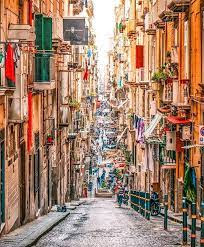
In this boiling cauldron, after a little, when one’s first distress had passed, there remained an extraordinary fascination. The life of Naples was and is the life of the streets, of the decumani, salite, scale, rampe, of which it is full; everything takes place there in these narrow ways, even the toilet; and little by little one is compelled by the obscene spirit of the city to wander continually, and, only half ashamed, to watch these poor people in all their pathetic poverty and animalism, their amazing unself-consciousness, their extraordinary and meaningless violence of gesture and speech—and yes, their joy of life. Was the Neapolitan of antiquity like this?...


For the Neapolitan is indeed a highly composite person. Humanity and cruelty, bravery and cowardice , openness and deceit, thrift and prodigality are all jumbled together in him and it is a puzzle to know which predominates. He is among Italy’s best soldiers—always light-hearted, facetious and pertinacious, marvellously expressive, too, in his features and gestures. He is not more dishonest than anyone else, nor does he lie maliciously, but to glorify himself and to be agreeable. He is too easy-going to be vindictive, he is emotional, but not revengeful. And to call him lazy is the most absurd and ridiculous charge ever brought against people who are essentially indefatigable. Watch the facchini at the port; the boatmen and fishermen, too, toil for hours at the oar on a bit of bread and a crock of water. And the peasants have only to be seen at work, laborious and untiring in the blazing heat, to convince one of their energy. The Neapolitan is, however, a gambler, though not perhaps more than his brother of the English working-class. He is cruel to animals, but not to children….


 Observe a Neapolitan of the upper class; he never walks, he strolls. If he is in a hurry, if he is pressed for time, he takes a cab or a taxi, but generally he strolls; passiare, he calls it. He stops to speak with a friend or greets an acquaintance with an eloquent gesture, loiters past the shop windows, lingers in the Galleria scanning the cafes, stays to read the placards before the newspaper kiosks and the bills displayed before the theatres and of course arrives late at his destination. For the Neapolitan is a flaneur of flaneurs, yet with something Spanish too, which is not surprising considering his history. …


This strolling, this passiare, often turns to good account, for it is the long tradition of the Neapolitans to conduct their affairs in the open air, whether it be the toilet or a business transaction. In this they are still as Greek as their remote ancestors. There in the street, in the piazza, in the Galleria the Neapolitan is most likely to be fortunate in a combinazione. And who will say he is wrong, since the open air is that which glorifies this great southern city set in the most beautiful landscape in the world.


### 


Edward Hutton: Naples and Campania Revisited. London, 1958. Pp. 3-6.

Friday, December 2, 2022

Edward Hutton revisits Naples


Revisiting Naples in 1957 after an absence that spanned two world wars, Edward Hutton's initial response was disillusion.


To come to Naples from Rome through the now fallen majesty of the Campagna, along that sombre road under Anagni and Montecassino, or by the Pontine Marshes under the Valerian hills, past spellbound Norma and the lilied meres of Ninfa, or to enter it first without warning out of the loneliness, the silence and the beauty of the sea is to experience an astonishing disillusion.


For there is nothing, I think, in all the South, nothing certainly in Italy, quite like Naples in its sordid and yet tremendous vitality, a vitality that is sterile, that wastes itself upon itself. It is still, as Bergeret the friend of Fragonard found it, the most animated city in Europe. A place so restless and noisy and confused that it might be pandemonium, so drab that it is not really redeemed even by the Castel dell’ Ovo, the Castel Nuovo and Sant’ Elmo.


All this meanness is emphasized and accentuated  by the unrivalled beauty of the world in which Parthenope stands, the spacious and perfect loveliness of the great bay, shining and yet half lost in all the gold of the sun, between the dreamy headlands of Sorrento, of Posilipo, of Misenum; the threatening gesture, the incomparable outline of Vesuvius, the vision of Capri, of Procida and Ischia rising out of the sea, the colour of sea and sky, of valley and mountain and curved shore. For this is Campania, the true Arcady of the Romans, and here more than anywhere else, perhaps, the forms of the past clothed in our dreams are indestructible, and will outface even such a disillusion as Naples affords.


In this incomparable landscape Naples stands, not like Genoa nobly about an amphitheatre of hills, nor like Palermo in an enchanted valley, but in the deepest curve of her vast and beautiful bay, at the foot of the hills and upon their slopes, beneath the great and splendid fortress of Sant’ Elmo, which towers up over the city in shining beauty and pride, the noble feature of a place that, but for it, would be almost without any monumental splendour.


Sant’ Elmo towers there over the city upon the west; farther away and to the north, upon a scarcely lesser height, stands the great Bourbon palace of Capodimonte, while to the east, upon the far side of the fruitful valley of the Sebethus, rises the violent pyramid of Vesuvius now without its silver streamer of smoke. Seen from afar, and especially from the sea, there can be but few places in the world comparable with this; the vast and beautiful bay closed on the west by Capo Miseno, with its sentinel islands Ischia and Procida, and on the east by the by the great headland of Sorrento more than twenty miles away as the gull flies, and defended, as it were, seaward by the island of Capri, is dominated in the very midst by the height and beauty and strangeness of Vesuvius….


Once in the city, Hutton described the pandemonium of its streets.


These long streets the colour of mud, built from the lava of Vesuvius, lined with tall, forbidding houses balconied with iron; those narrow salite climbing up towards Sant’ Elmo or descending to the harbour and Santa Lucia, crowded and squalid and hung everywhere with ragged clothes drying in the squalid air;…the noise that here more than any other city in the world overwhelms everything in its confusion and meanness, the howling of children, the cries of the women, the shouting of the men vainly competing with the hooting of horns, the explosion of the open exhausts of the motor vehicles, the cracking of whips, the beating of hoofs, the sirens of steamers, the innumerable bells—not only those, here so harsh, of the churches, but as I remember them the brutal gongs of trams, the bells of cows and goats; the mere hubbub of human speech that seems more deafening than it is by reason of the appalling emphasis of gesture; all this horrified and confused the stranger, chiefly perhaps, because he could find nothing definite in its confusion for the mind to seize upon—the mind indeed being half paralyzed by the flood of undistinguishable things, not one of which was characteristic, but rather all together. The mere extent of the place too, shapeless as it is, stretching for miles in all its sordidness along the seashore, appalled one; for its disorder was a violent disorder, its voice the voice of the mob, cruel, blatant, enormous, signifying nothing. 


###


Edward Hutton: Naples and Campania Revisited. London, 1958. Pp.  1-3.

Friday, November 25, 2022

Naples Revisited


Edward Hutton returned to Naples in 1957 having first visited the city sixty years before. Although Italy had changed dramatically, especially after the Second World War, there was something unchanging about Naples. Here I reproduce his Preface to Naples and Campania Revisited.


While Italy is still the most delightful of all countries to live in, I must admit that with the rapid democratization of the world since the Second World War a rather saddening change has befallen her.


The age of the traveller is gone; even the age of the tourist too. Now the tripper, decanted in crowds from charabanc and motor-coach, descends on the lovely cities, and passes like a flood from Cathedral to gallery and museum, open-mouthed or indifferent; or masquerading as a pilgrimage swamps such a city as Assisi, so that it is only possible to enjoy the place in peace in the winter from November to March. Pandemonium resumes her reign at Easter.


And then there is the sophistication of the countryside. Even the Via Appia, the “Queen of Roads”, the backbone of Campania, is outraged with every sort of commercial placard and advertisement. And all its antiquity has been sacrificed to the motor-car.


It is, of course, petrol and perhaps America that are the great levellers.


The noise everywhere in the cities has not only increased but has changed its nature. It is no longer human but mechanical. Every city, every town proclaims at its gates: Zona di Silenzio, which means that it is forbidden to sound the motor-horn in its streets. But what is the good of that when every car, every lorry, every Vespa, every motor-cycle is driven with open exhaust to make as much noise as possible? For the Italian seems to believe that noise is power. In many cities, in Florence for instance and in Rome, too, it is difficult to get any sleep till the not so early hours of the morning, and then at five or six o’clock it begins all over again.


Naples, save Rome the only capitol city in the peninsula, seems largely oblivious of those incursions, which are absorbed perhaps by the Cathedral of S. Januarius, and the museum, but chiefly I suspect by Pompeii and Capri. At any rate the churches of Naples, full of pictures of the seventeenth century and Neapolitan Baroque, are for the most part unvisited, and if the Toledo once no doubt “inexpressively Neapolitan” has been commercialized till it is entirely anonymous and has really become the “Via Roma”, that is to say like any other main street in Milan or Turin, there still remains as unvisited as the churches, and almost as I remember them when I first came to Naples sixty years ago, many stradevichisalitefondaci, and not least the Via del Tribunale and the speccanapoli—the Via San Biagio and the Piazza Capuana with its lovely Tuscan gate and its market entirely Neapolitan neither vulgarized nor emasculate.


To stroll in those narrow streets filled with light and shade between the lofty balconied houses from church to church, from the majolica cloister of the Clarisse of Santa Chiara to the arcaded and fountained garden of San Gregorio Armeno under its many coloured dome, from the Guglia of the Immacolata to the Guglia of San Domenico, from the shrine of the blood of S. Gennaro to the ossuary of Sant’ Agostino alla Zecca, from the tomb of Tino di Camaino in the Donna Regina to the strange Baroque statues of San Severo, to leave Donatello in Sant’ Angelo a Nilo to find Antonio Rossellino in Monte Oliveto, to search for the pictures of Caravaggio, of Caracciolo, of Stanzione, will fill many a morning with quiet unhustled happiness, as though today were yesterday, and almost as though the Regno had never passed away. For in Naples certainly the old songs are the best.


                                                   O dolce Napoli,

                                                   O suol beato,

                                                   Ove sorridere

                                                   Volle il creato!

                                                   Tu sei l’impero

                                                   Dell’ armonia—

                                                   Santa Lucia!

                                                   Santa Lucia!


1957


###


Edward Hutton: Naples and Campania Revisited. London, 1958. Preface. Pp. vii-viii.