Search This Blog

Showing posts with label Lake Como. Show all posts

Friday, October 10, 2025

Masolino in Castiglione d'Olana

 Walking south along the beautiful route from Como to Milan, Edward Hutton stopped at Castiglione d'Olana to view frescoes by Masolino, the great Tuscan painter of the quattrocento whose most famous work is in Florence's Brancacci chapel.


Castiglione

There are many other happy places about Varese, but the traveller, already anxious for Milan, will scarcely linger here, more especially as the best of all lies on his way. That best is the road to Castiglione d’Olana, and Castiglione itself. You go, if you are wise, through Bizzozero, climbing the hills, with wonderful views of the Alps and the lakes all the way, and then descend through delicious woods by Lozza to the little town of Castiglione, partly in the valley of the Olana, a pleasant stream, and partly on the steep hill above it. 


The Castello, which belonged to the noble family of Castiglione, on the hill above the little town, or rather village, had by the beginning of the fifteenth century become ruined, and there Cardinal Branda da Castiglione built the church we see dedicated to Our Lady of the Rosary, to S. Lorenzo and to S. Stefano, together with a little Baptistery separate from the church and to the north of it. Here by the utmost good fortune one of the greatest Tuscan painters of that day was employed to adorn that building in fresco. Branda da Castiglione was Cardinal of S. Clemente, and it was there, doubtless, he had seen the work of Masolino and liked it. So he bade him paint his own church of the Rosary with some of the joyful and glorious mysteries which that crown of prayers celebrates, and today we find in the choir the result of this commission. There we see the Marriage of the Blessed Virgin, the Annunciation, the Nativity, the Adoration of the Magi, the Assumption and the Coronation of Our Lady in six compartments with Our Lord in Benediction in the midst …. In the Baptistery close by we find many scenes far better preserved than those in the church, of the life of S. John Baptist, master-works of the great Tuscan whom Cardinal Branda da Castiglione found at work in the S. Clemente in Rome. The first modern critics to write of these paintings  were the almost infallible Crowe and Cavalcaselle. Vasari does not mention them, and, as it seems, they were quite unknown when in the end of the eighteenth century, the church being very dark, they were covered with whitewash and were only uncovered in 1843.


It has been reserved for a critic of our own time to make a further discovery. For, as it happened, Mr. Berenson came to Castiglione not long ago and found in the Palazzo Castiglione here a great frieze running round the great hall consisting of four frescoes from the master’s hand. Three of these had been whitewashed, but in that which had escaped he found one of the finest and one of the most surprising things in all Tuscan art of the quattrocento: “nothing less than a vast landscape, a sort of panorama of the Alps, with a broad torrent rushing down to the plain.” Was it Cardinal Branda who so loved these great hills he could see from his house, or Masolino himself, who, Tuscan as he was, looking upon them for the first time, gave himself suddenly to them and recorded here forever his sudden and overwhelming joy? We shall never know: only, as Mr. Berenson says, “let us cease talking about the late date at which in Italy landscape began to be treated on its own account.” *


###


Edward Hutton: The Cities of Lombardy, New York, 1912. Pp. 54-55.


*Bernard Berenson, an acquaintance of Hutton's, was a connoisseur and prolific writer on the art of the Italian Renaissance. 

Friday, October 3, 2025

Lake Como

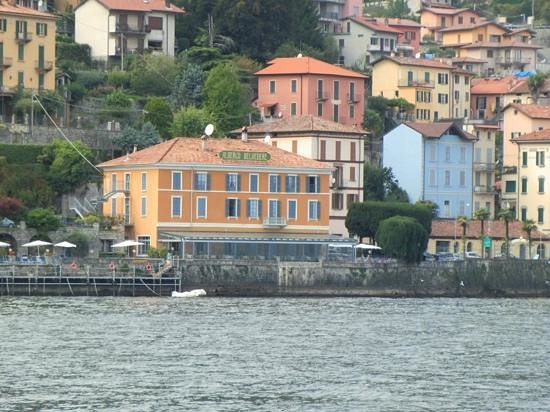
 Although my wife and I visited Lake Como more than a dozen years ago, the memory is still fresh in our minds. I will never forget entering our room at the aptly named Hotel Belvedere in Argegno, and opening the large shutters to reveal a truly fantastic vision of the beautiful blue water and the surrounding hills. Here are excerpts from Edward Hutton's description of Lago di Como.


Hotel Belvedere, Argegno

Men have fruitlessly discussed for ages which is the most beautiful of the lakes in this paradise that lies at the gates of Lombardy, among the mountains. One might as well consider whether Winchester Cathedral were more beautiful than Salisbury, or Wells than either. For no one is like another, save that all are to be enjoyed. Lago Maggiore has the gift of the wind, of the wideness of some inland sea and of distance; Lago Lugano has the gift of shadow, of great hills and of many secret places; Lago di Como has the joy of richness and of colour, the mystery of woods and the surprise of the snow, and of far-away great mountains; Lago d’Orta has flowers and silence. But of all the lakes, I love best the Larian, Lago di Como, because it is wholly Latin and there I can tread in the ways that are from of old, I can behold places that have always been sacred and remember the history of Europe. …[30]


But delightful though the lake is between Bellaggio and Colico and between Bellaggio and Lecco, there can be no doubt that its most beautiful, and its most frequented and famous part, is that which lies between Bellaggio and the city of Como—the lake of Como proper. The special and enchanted beauty of the Italian lakes is here at its best, and all that is most characteristic  in the strange lavishness of their beauty seems here to have found its best expression. And to add to our pleasure it is here, too, that the historical interest of this part of Lombardy reaches its climax. Here the Latin world is secure and we feel ourselves in the country of Pliny and Virgil…. [45]


Opposite Lezzono we see the only island on the lake, the Isola Comacina. The name of this island takes our thoughts back over a thousand years and more of history.


Here, as is supposed, Caninius Rufus, one of Pliny’s correspondents had a villa. “How is Como looking,” Pliny writes to him, “your darling spot and mine? And that most charming villa of yours, what of it, and its portico where it is always spring, its shady plane trees, its fresh crystal canal and the lake below that gives so lovely a view? [47]…


Who shall describe the way from Isola Comacina to Como:  is it not one of the most luxurious beauties in the world? Argegno with the Val d’Intelvi, Nesso with its waterfall, what can be said of them?... [47]


From Argegno, indeed, to Como it is villa and garden and grove all the way. Who is there that knows Como that has not floated at evening under those balconies heavy with roses, those terraces stately with cypresses and myrtles, those hanging gardens of azaleas and lilies and geraniums, where the magnolias shine in the twilight and the night is heavy with sweetness? [49]…


No one, I suppose, comes to Como, that shining city under the Brunate at the lake’s head, for history. There is plenty of it if one does; but…the olive-clad hills, the entrancing byways and the lake itself, entice one to be ever up and about, what time one can save from these is given, and I think without hesitation, to the Duomo, which Street so unaccountably failed to appreciate, but which has plenty of lovers nevertheless.


The Duomo and the Broletto, an earlier work of black and white marble, beside it, make up a group of buildings as picturesquely lovely as any in Lombardy, and few there be who do not straightway fall in love with them. As for the church, it is, I suppose, one of the finest examples of married Gothic and Renaissance—a Gothic yet perfectly developed and yet without fantastic excess, a Renaissance sober and sweet and without stiffness—anywhere to be found in Italy. [49-50]


###


Edward Hutton: The Cities of Lombardy, New York, 1912. Pp. 30-50.

Friday, June 10, 2022

Lombardy: Lake Como

Although my wife and I visited Lake Como more than a dozen years ago, the memory is still fresh in our minds. I will never forget entering our room at the aptly named Hotel Belvedere in Argegno, and opening the large shutters to reveal a truly fantastic vision of the beautiful blue water and the surrounding hills. Here are excerpts from Edward Hutton's description of Lago di Como.


Hotel Belvedere, Argegno

Men have fruitlessly discussed for ages which is the most beautiful of the lakes in this paradise that lies at the gates of Lombardy, among the mountains. One might as well consider whether Winchester Cathedral were more beautiful than Salisbury, or Wells than either. For no one is like another, save that all are to be enjoyed. Lago Maggiore has the gift of the wind, of the wideness of some inland sea and of distance; Lago Lugano has the gift of shadow, of great hills and of many secret places; Lago di Como has the joy of richness and of colour, the mystery of woods and the surprise of the snow, and of far-away great mountains; Lago d’Orta has flowers and silence. But of all the lakes, I love best the Larian, Lago di Como, because it is wholly Latin and there I can tread in the ways that are from of old, I can behold places that have always been sacred and remember the history of Europe. …[30]


But delightful though the lake is between Bellaggio and Colico and between Bellaggio and Lecco, there can be no doubt that its most beautiful, and its most frequented and famous part, is that which lies between Bellaggio and the city of Como—the lake of Como proper. The special and enchanted beauty of the Italian lakes is here at its best, and all that is most characteristic  in the strange lavishness of their beauty seems here to have found its best expression. And to add to our pleasure it is here, too, that the historical interest of this part of Lombardy reaches its climax. Here the Latin world is secure and we feel ourselves in the country of Pliny and Virgil…. [45]


Opposite Lezzono we see the only island on the lake, the Isola Comacina. The name of this island takes our thoughts back over a thousand years and more of history.


Here, as is supposed, Caninius Rufus, one of Pliny’s correspondents had a villa. “How is Como looking,” Pliny writes to him, “your darling spot and mine? And that most charming villa of yours, what of it, and its portico where it is always spring, its shady plane trees, its fresh crystal canal and the lake below that gives so lovely a view? [47]…


Who shall describe the way from Isola Comacina to Como:  is it not one of the most luxurious beauties in the world? Argegno with the Val d’Intelvi, Nesso with its waterfall, what can be said of them?... [47]


From Argegno, indeed, to Como it is villa and garden and grove all the way. Who is there that knows Como that has not floated at evening under those balconies heavy with roses, those terraces stately with cypresses and myrtles, those hanging gardens of azaleas and lilies and geraniums, where the magnolias shine in the twilight and the night is heavy with sweetness? [49]…


No one, I suppose, comes to Como, that shining city under the Brunate at the lake’s head, for history. There is plenty of it if one does; but…the olive-clad hills, the entrancing byways and the lake itself, entice one to be ever up and about, what time one can save from these is given, and I think without hesitation, to the Duomo, which Street so unaccountably failed to appreciate, but which has plenty of lovers nevertheless.


The Duomo and the Broletto,   an earlier work of black and white marble, beside it, make up a group of buildings as picturesquely lovely as any in Lombardy, and few there be who do not straightway fall in love with them. As for the church, it is, I suppose, one of the finest examples of married Gothic and Renaissance—a Gothic yet perfectly developed and yet without fantastic excess, a Renaissance sober and sweet and without stiffness—anywhere to be found in Italy. [49-50]


###


Edward Hutton: The Cities of Lombardy, New York, 1912. Pp. 30-50.